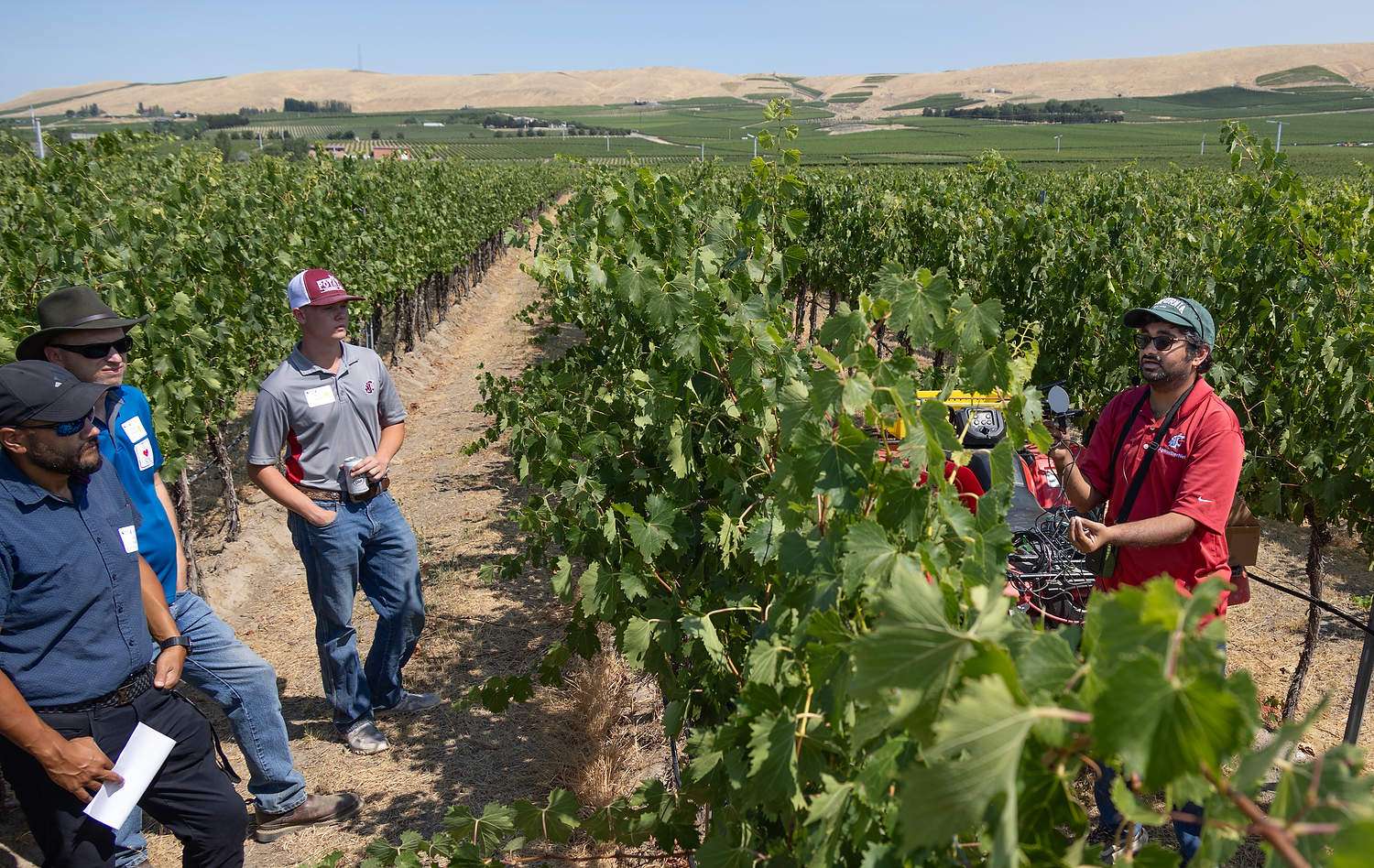




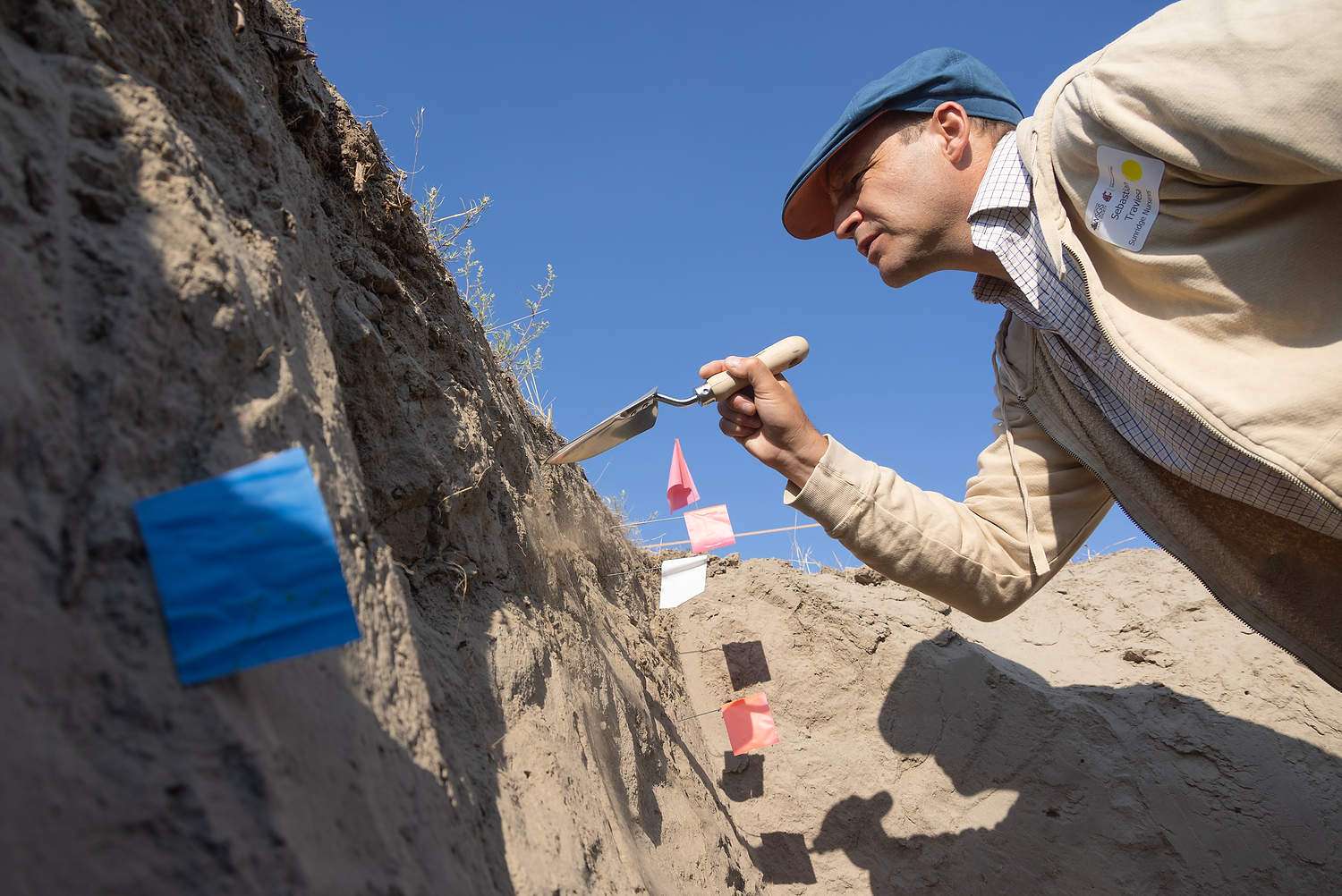
About 50 people participated in a viticulture field day on July 30 that swung from basic get-your-hands-dirty soil health to the interconnectivity of vineyard sensors.
The annual field day, organized by Washington State University and the Washington State Grape Society, included stops at the university’s research vineyard near Prosser and Ciel du Cheval Vineyard near Benton City.
Soil health was the overarching topic in Prosser at the Irrigated Agriculture Research and Extension Center, where WSU soil scientist Liz Gillispie led groups in squeezing soil ribbons through their fingers, chiseling the walls of an ATV-sized soil pit and spraying caliche with vinegar just to watch it bubble.
Rui Liu, WSU’s specialty crop weed scientist, discussed potted samples of six common weeds, including puncture vine, field bindweed and yellow nutsedge. All are showing signs of resistance to herbicides, she said. And for all the weeds, spraying them when they are small will have the most effect.
Devin Rippner, a U.S. Department of Agriculture soil scientist, gave tours through a research vineyard funded by the Washington Soil Health Initiative to test soil-friendly practices.
One of his big lessons was that growers cannot grow regenerative or organic vineyards using the same practices used with conventional farming. The weeds are too competitive, and the vines might need more water.
“That’s the reality of this,” he said.
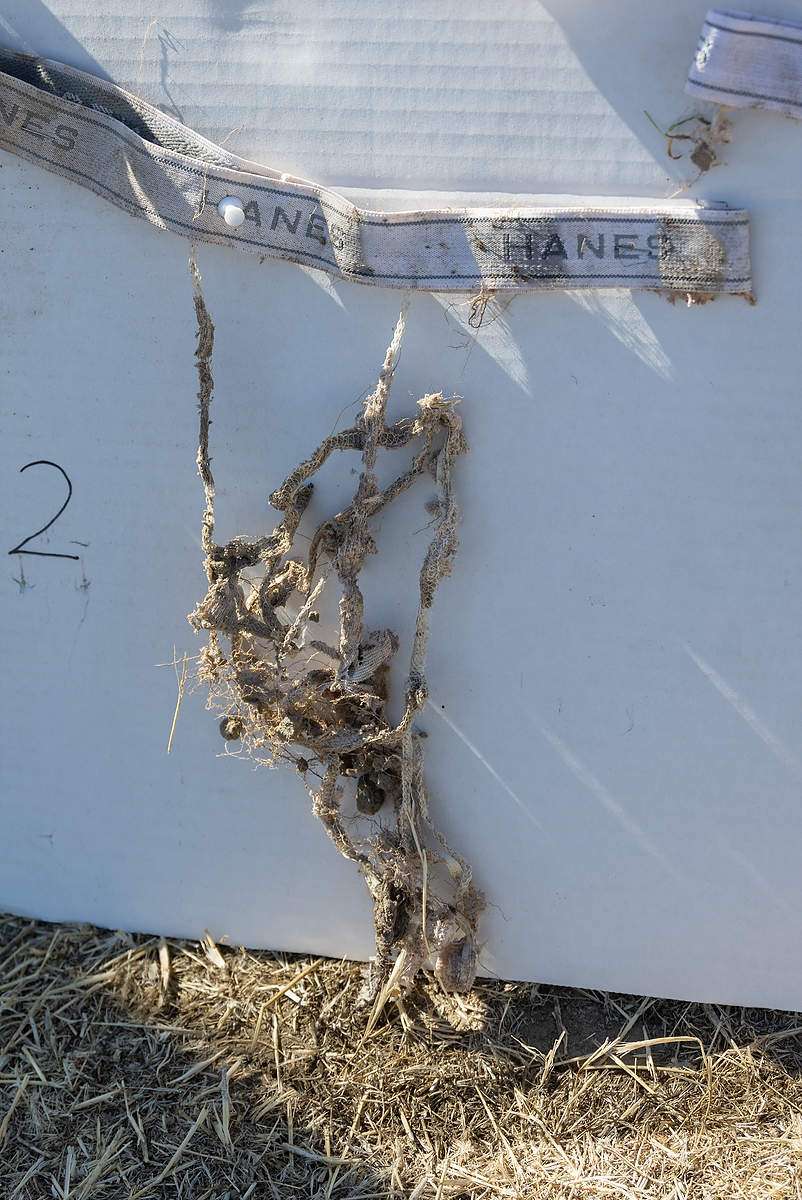
He also discussed the infamous underwear trial, burying cotton briefs underground for 60 days to measure the microbial activity in the soil. He determined water levels made the biggest difference. Some of the skivvies had deteriorated nearly to threads.
In nearby Benton City, at Ciel du Cheval Vineyard, participants got a close look at irrigation technology such as leaf wetness sensors, Nelson Irrigation’s Twig valve controllers and infrared imagery to determine fruit surface temperature and sunburn risk.
Kade Casciato, vineyard manager and viticulturist, told growers the Twig system turns water on and off within seconds. The system uses sensors that communicate through radio waves with a gateway that is connected to the internet and mounted on the nearby office building.
Many commercial vendors offer subscription services to hook up and maintain sensors and aggregate the data to help advise irrigation decisions.
AgWeatherNet, WSU’s weather service, is helping growers install their own DIY sensors and networks, contributing data to its predictive models for stress and sunburn and allowing growers to skip the subscription fee — not to compete with vendors but to give growers a less expensive option.
“In a market like we’re in now, no farm should be paying a subscription,” Casciato said. •