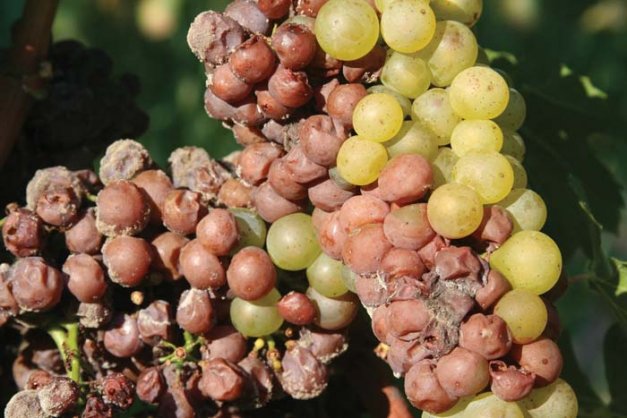




Dr. Wayne Wilcox of Cornell University says Botrytis cinerea as a weak pathogen that prefers injured, senescent tissue, such as old blossom parts and ripening fruit. The more ripe the fruit, the more susceptible it becomes, an added consideration when rains delay harvest.Botrytis thrives where there’s low evaporative water loss and prefers high humidity and poor air circulation. Bunch rot (botrytis) overwinters on canes and vineyard debris, including cluster rachises and mummified berries, which is why vineyard sanitation is important. During humid periods in the growing season, especially in the spring, spores are produced from overwintering sources and dispersed by […]
Already part of our community? Log in here
Our premium content is now only available to members.
Join our community and receive access to our exclusive stories, photos, graphics and videos, and support our efforts to ensure growers have the information they need for success.