




Del Monte Foods announced the closure of its Yakima, Washington, plant — one of the primary pear canneries in the U.S.
“This was an extremely difficult decision, but one the company needed to make to align the business with consumer demand,” said company spokeswoman Carissa Sauer. “No other facility in the Del Monte Foods network is impacted by this decision.”
Del Monte also processes pears in central California, but Sauer declined to say how much Northwest pear tonnage could be processed at Del Monte’s California facility.
“In 2024, Del Monte processed close to 25,000 tons,” which represented about half the Northwest crop, said B.J. Thurlby, business manager of the Pacific Northwest Canned Pear Service, which runs promotional programs for Oregon and Washington pears under a federal marketing order.
In recent years, the share has been as high as 50,000 tons.
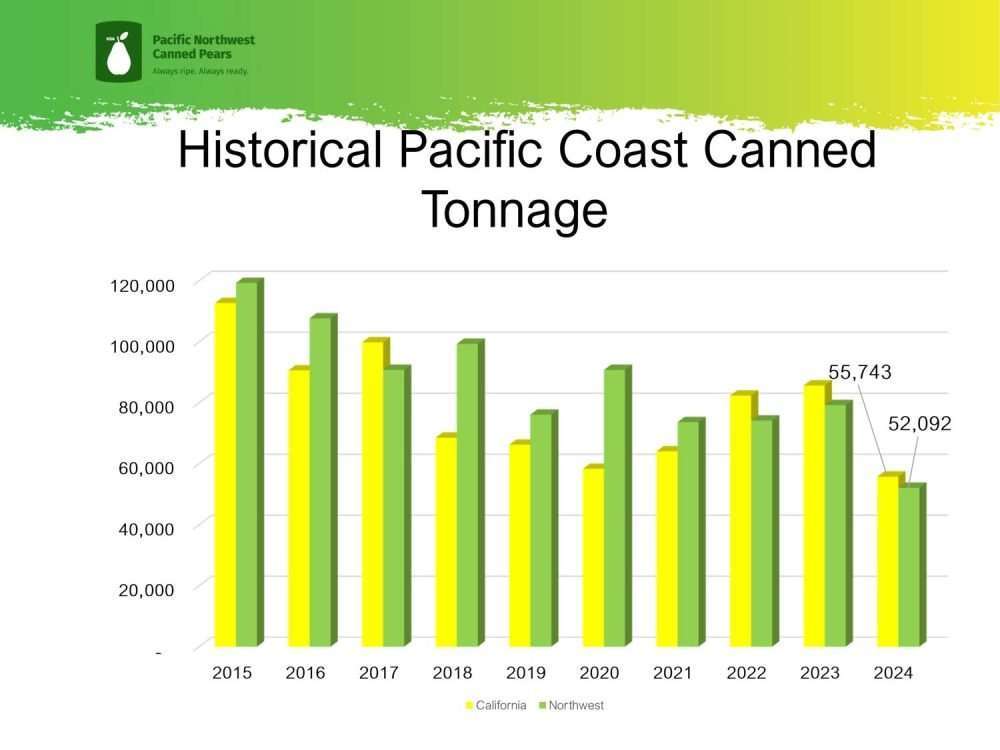
But the pandemic boom in demand for canned goods has subsided, and retail sales have slowed, leading to an oversupply in canned pear inventory. Last year, the Northwest and California industries each canned just over 50,000 tons, the lowest amount in the previous decade.
Last week, the U.S. Department of Agriculture announced it will purchase $14 million worth of canned pears through a Section 32 program, which helps producers alleviate an oversupply situation and provides fruits and vegetables to food banks and other nutrition services.
Thurlby said the region’s processors recently estimated there are 15,000 tons too many being grown in Washington and Oregon for the processing market. Last year, Del Monte and the Neil Jones Food Co. of Vancouver, Washington, the Northwest’s largest buyers, paid $430 per ton for Grade No. 1 Bartletts under a pricing agreement set with growers in 2023.
This year, negotiations between growers and processors, through the Washington-Oregon Canning Pear Association, were already struggling, said Thurlby, who serves as manager for that association as well. Processors wanted to reduce the price, he said.
The closure complicates an already complicated negotiation process, said Thurlby.
The Del Monte closure reduces the Northwest industry to one cannery, the Northwest Packing Co., owned by Neil Jones. Pacific Coast Producers, a California cooperative, also contracts fruit from Northwest growers.
“Growers need to lock in their process tonnage with either Northwest Packing, Del Monte or Pacific Coast Producers ASAP,” he said. “At the end of the day, we will have to see if any other processor steps up and decides they can sell more tonnage than they currently have.”
Growers are also looking to take their Bartletts to the fresh market, which was already expecting a healthy crop. •