






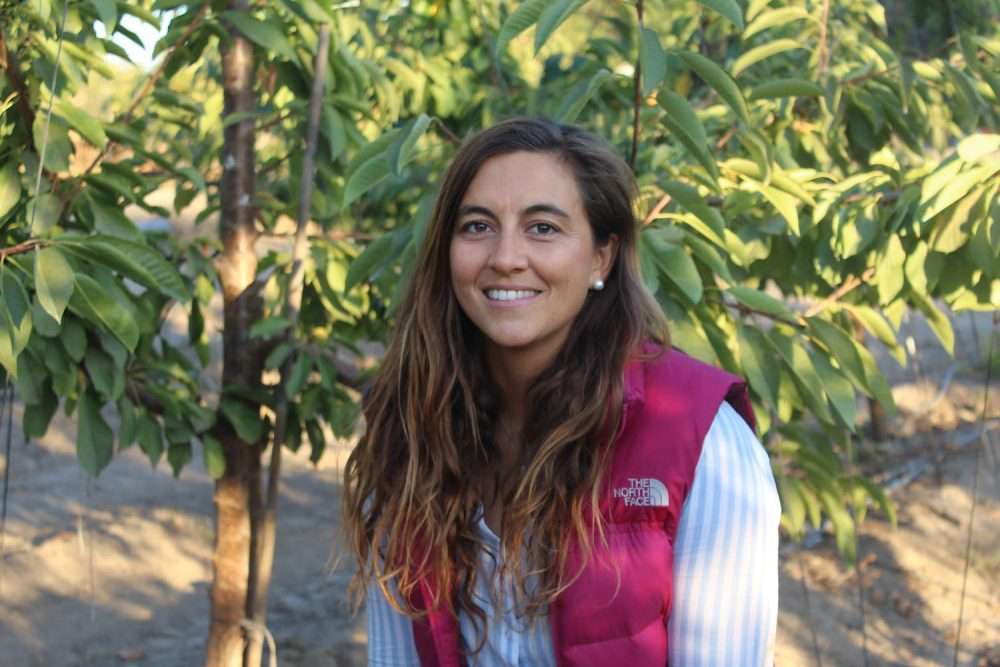
Cherry growers have a new resource at Washington State University, with Antonia Sánchez-Labbé joining as a horticulture extension educator based at the Irrigated Agriculture Research and Extension Center in Prosser.
Most recently, Sánchez-Labbé worked as international technical manager for Bloom Fresh, a variety development company, focusing on its cherry varieties that were originally developed at International Fruit Genetics, or IFG.
She’s no stranger to Prosser or the Washington cherry industry, as she did part of her graduate studies with cherry physiologist Matt Whiting at WSU. Then, she returned to her native Chile and graduated from The Pontifical Catholic University of Chile.
After that, she worked as a farm manager for a Chilean operation growing cherries, table grapes and peaches. Her experiences in research and development and farm operations will inform her extension work, she said.
“Growers have been telling me that as much as they value the research, they want to hear from other growers about how they are successful, and that’s what I want to bring in my program, (that) grower interaction and collaboration,” she said.
Sánchez-Labbé is in the process of conducting her needs assessment, the starting effort extension educators make to get to know their industry and the challenges that growers face. Her role will serve cherry, apple and pear growers.
She and her counterpart, Wenatchee-based horticulture extension educator Lexie McDaniel, will work together to develop their extension programs based on grower needs, geography and their own expertise. So far, she’s hearing a lot from cherry producers.
“There’s definitely challenges with crop load management and vigor control, but it’s also making sure the research findings are available,” she said. “Growers tell me there are knowledge gaps, but sometimes, I know the research is there. … So, we need to get creative and contextualize the information” to meet the needs of growers today.
She’s also looking forward to developing more Spanish-language extension programing, to help the industry’s Hispanic community connect better to research findings and best practices.
“Language shouldn’t be a barrier in that learning process,” she said.