




The WA 64 needs ample direct sunlight exposure and thinning to succeed.
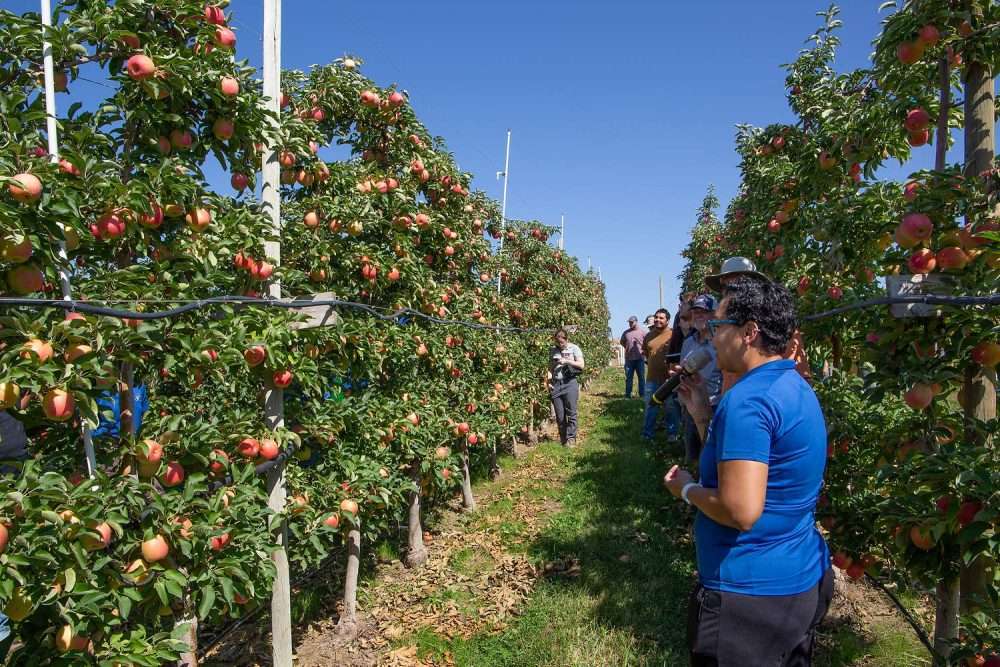
Those were a couple of key messages from a field day on Sept. 17 at two sites near Prosser, Washington, focusing on the new Washington State University apple to be marketed as Sunflare.
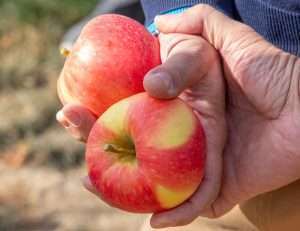
Manoella Mendoza, research operations manager of the Washington Tree Fruit Research Commission, has been monitoring fruit quality metrics of Phase 3 commercial trial blocks near Prosser and Quincy.
The mature Prosser block, a vertical trellis Tatura fruiting wall on M.9-337 rootstocks, has shown low variability in fruit color, fruit size and bloom density, she said. The Quincy block, with central leader trees on G.41 rootstocks, had more variability in those traits and more biennial bearing, she said.
At another site, a demonstration block at the WSU Roza research orchard north of Prosser, extension specialist Bernardita Sallato said the WA 64 will need thinning to avoid biennial bearing like any other apple. Its older WSU cousin, the WA 38, marketed as Cosmic Crisp, self-thins.
So far, the WA 64, a cross between Honeycrisp and Cripps Pink, has shown low susceptibility to bitter pit, Sallato said. Her team has rarely encountered the nutrient disorder in WA 64, but they have in two rows of Honeycrisp trees planted right next door as a comparison.
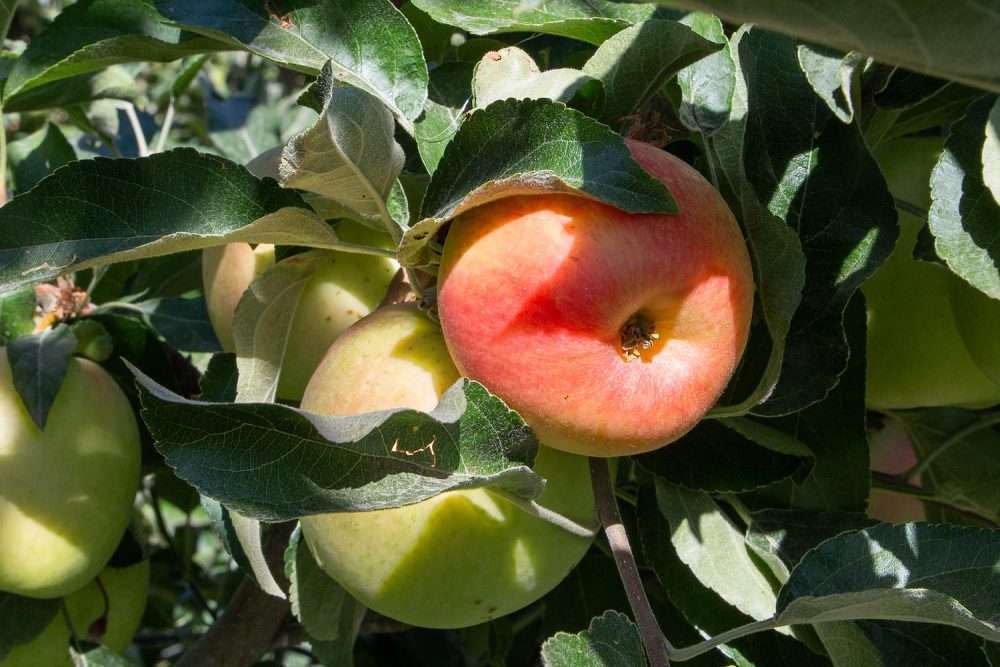
The field day also covered rootstocks, tree architecture and pruning.
Nurseries started taking tree orders for WA 64 this year and expect growers to begin commercially planting in 2026, according to the International New-Varieties Network, which holds the propagation license from WSU.
WSU and the Research Commission will hold another WA 64 field day on Sept. 25 at the Sunrise research orchard and a commercial site near Quincy. For more information, visit: https://treefruit.wsu.edu/event/wa-64-pre-harvest-field-tour-north-central-washington/.
