



The economic malaise of the fruit industry has claimed one of the nation’s largest, vertically integrated, deciduous tree fruit companies.
The June bankruptcy filing of Brewster Heights Packing and Orchards shows how multiple years of rising costs and low returns are affecting some of Washington’s agricultural titans — as well as their suppliers and service companies.
“This is not hyperbole anymore,” said Enrique Gastelum, CEO of WAFLA, an agricultural labor resource nonprofit that helps companies hire H-2A workers. “It’s here, it’s real.”
Washington’s farmers have seen the lowest profits among all 50 states and endured the largest rise in production costs over the past 10 years, according to a 2026 report commissioned by the Washington State Department of Agriculture.
Brewster Heights, one of the biggest apple, cherry and pear producers in the United States, said it aims to reorganize, not to go out of business.
“We want to reassure our growers, employees, vendors, customers, and our communities that operations continue as normal throughout the restructuring process,” a company spokeswoman said in a statement to Good Fruit Grower. “Orders are being fulfilled, employees and labor contractors are being paid, and operations are running uninterrupted.”
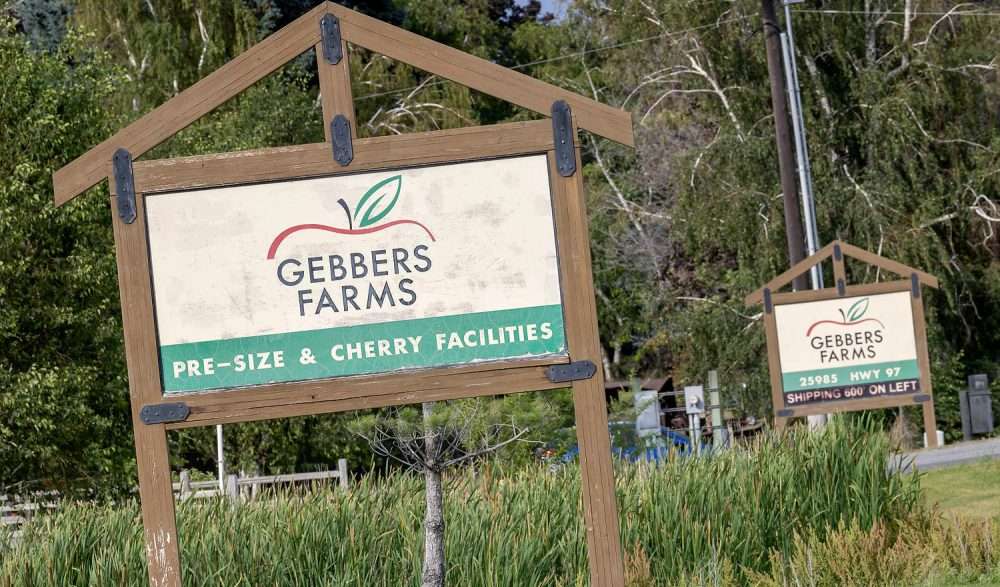
Brewster Heights is sometimes referred to as Gebbers Farms, after the family that has owned the company and other agricultural enterprises for six generations spanning more than 100 years, but only Brewster Heights is in bankruptcy.
While overseeing a bidding process for Brewster Heights’ assets, the Eastern District of Washington U.S. Bankruptcy Court authorized the company to take out a debtor-in-possession loan of up to $25 million from Sandton Capital Partners to pay its 3,700-plus employees and keep facilities operating.
“Things are normal” for workers, said Sheldon Brown, the Jamaican embassy liaison for the country’s H-2A workers hired by Brewster Heights. Schedules and paychecks have not been disrupted, he said.
Brewster Heights owes a total of $24 million to unsecured creditors, among them service and supply companies, local irrigation districts, equipment rental firms and more, according to court documents. The top three are Wilbur-Ellis Co. at nearly $6 million, Nutrien Ag Solutions at $2.5 million and Northwest Wholesale at $1.7 million.
Managers at all three creditors declined interviews. Wilbur-Ellis filed an objection in bankruptcy court, claiming an initial bid price of $231 million undercuts the operation’s value. In March 2025, Wilbur-Ellis extended credit to Brewster Heights. At the time, the grower-shipper estimated its value at $421 million, with $67 million in equity remaining after debt.
“The drop in the market … cannot account for the enormity of the valuation difference,” Wilbur-Ellis said in the objection.
Meanwhile, other large companies are lining up to purchase assets.
The day after the bankruptcy filing, Legendary Fruit, owned by International Farming Corporation, filed a letter of intent to purchase Brewster Heights’ assets, which include packing houses and 8,500 acres of orchards, as well as marketing rights to SugarBee, Rockit and Lucy apples, for $231 million.
On June 9, Yakima fruit packing company Borton & Sons objected to the bankruptcy’s rapid timeline, saying the company is interested in making a bid for Brewster Heights, as well. Borton and Brewster Heights are equal partners in the marketing company Chelan Fresh. Borton supplies about 49 percent of the fruit sold by Chelan Fresh, according to court filings.
The court has set Aug. 7 as the deadline to receive bids and Sept. 7 as the targeted closing deadline.
Brewster Heights began seeking help for cash-flow problems in 2024 by trying to refinance with an investor that owned other significant Washington tree fruit property, according to a court declaration by Brooke McGuire, the Brewster Heights chief financial officer. Those negotiations failed and in March this year, the company’s lenders cut off financing.
McGuire’s declaration estimated Brewster Heights owes its primary, secured lenders about $231 million, the amount that Legendary Fruit has offered in its bid.
Industry leaders have been warning that lenders were likely to cut off financing for struggling operations this season — including speakers at the U.S. Apple Association and Washington State Tree Fruit Association’s annual meeting late last year.
Karina Gallardo, a Washington State University agricultural economist, said FOB prices for fruit in most categories is falling below the “break-even” cost of production, regardless of a company’s size. She called the scenario “scary.”
WAFLA is owed $807,000 by Brewster Heights, according to the court claims. Brewster Heights is a longtime member and one of the state’s largest H-2A employers.
Gastelum declined to comment on the specifics of the bankruptcy, but he said labor and supply costs are amplified in the remote area of North Central Washington where Brewster Heights operates, further removed from ports, metropolitan centers and airports than areas closer to Wenatchee and Yakima.
Rising costs, mostly related to labor, are putting the whole industry at risk, not just farms with smaller acreage, he said.
“None of those largest, big boys are untouchable,” Gastelum said. “They could be next.” •