




The International Fruit Tree Association wrapped up the third and final day of its tour of New York’s Hudson Valley on July 22.
The final day was devoted to educational sessions presented by Cornell University researchers, including a valedictory presentation by Terence Robinson, longtime professor and fruit crop physiologist who will retire in December.
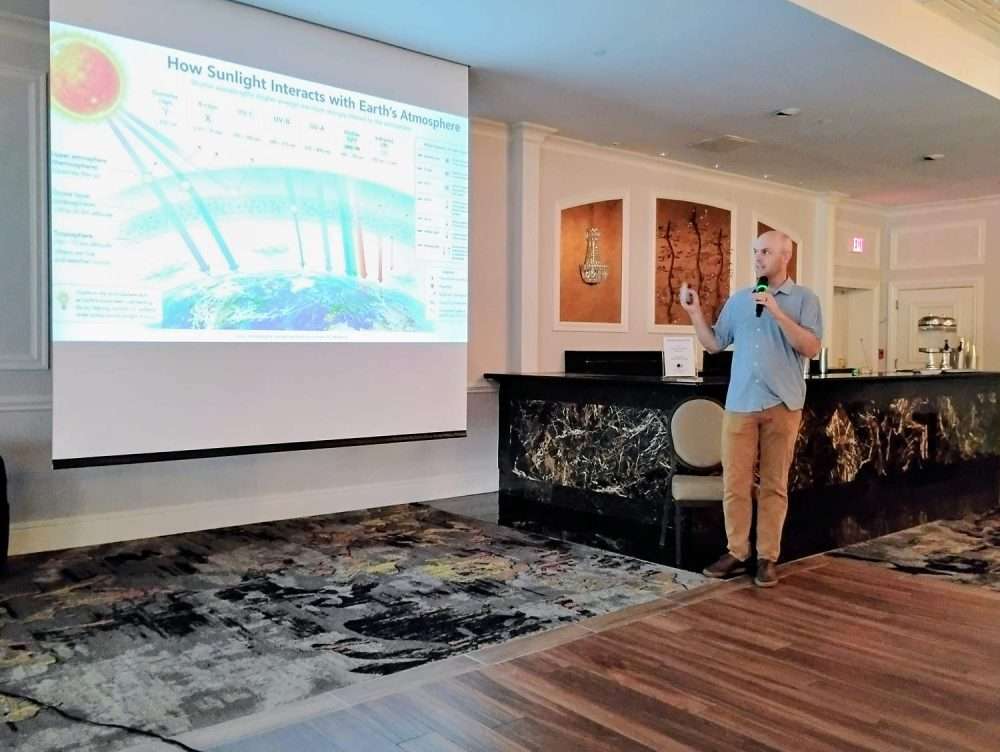
Scott Cosseboom, a plant pathologist stationed at Cornell’s Hudson Valley Research Laboratory in Highland, started things off by discussing the potential of ultraviolet, or UV-C, light application for disease control in apples.
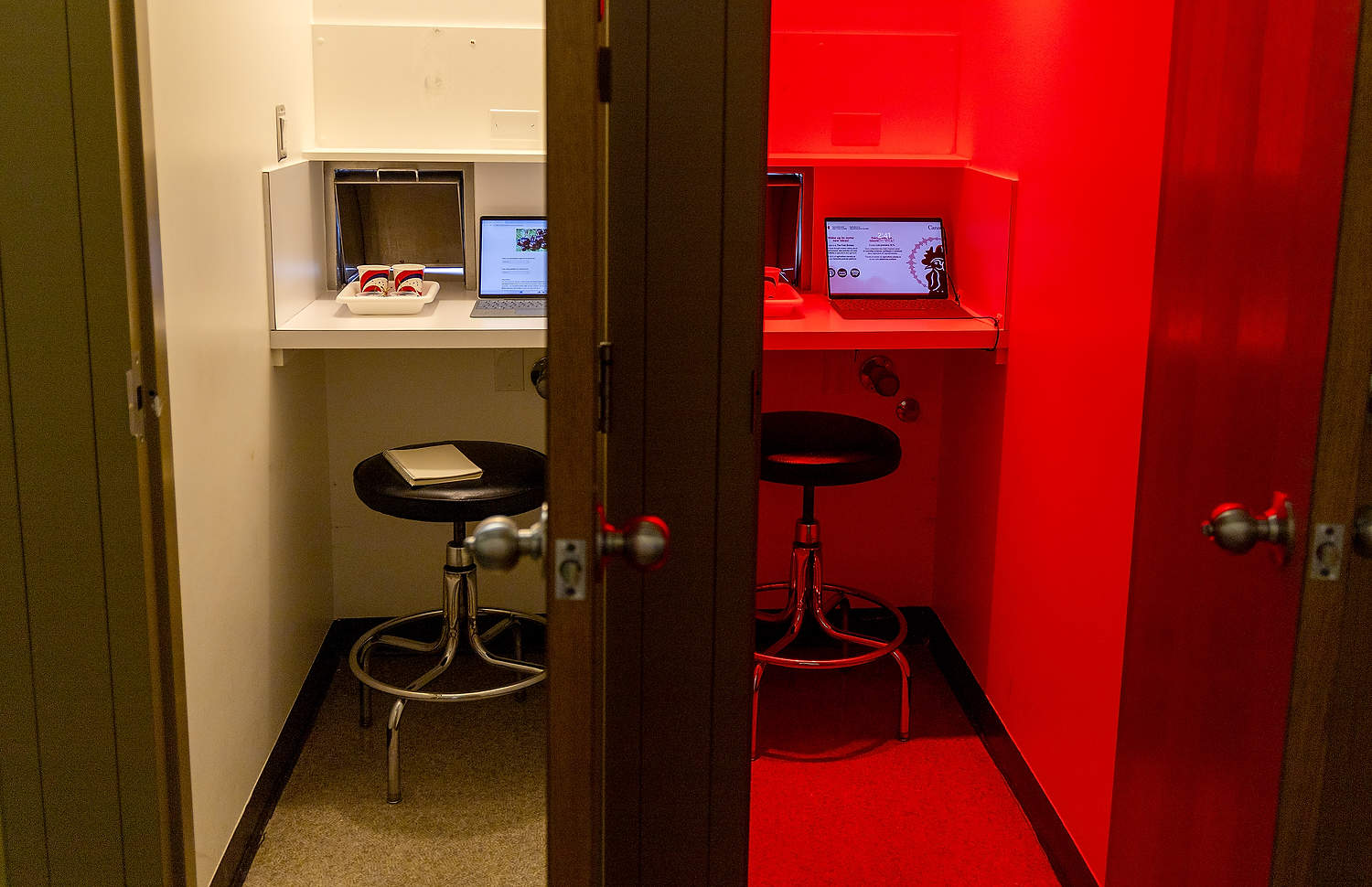
Previous Cornell UV-C trials have shown promising results against fire blight, apple scab, powdery mildew and other diseases in western New York, and Cosseboom is studying the technique in the Hudson Valley. The IFTA audience got a look at his UV-C application rig at the research lab on the second day of the tour. (See our story from the March 15, 2024 issue: “Glowing light at night helps fight fire blight.”)
Cornell research entomologist Andres Antolinez discussed nonchemical alternatives to woolly apple aphid control, including UV-C treatment, which has shown some success in lab and field trials. But further research is needed to optimize timing and dosage, he said.
Fruit IPM coordinator Anna Wallis discussed efforts to improve and expand Cornell’s statewide integrated pest management monitoring network, including tree fruit scouting courses for farmworkers held in English and Spanish at dozens of farms throughout the state.
Mike Basedow, Cornell regional tree fruit specialist serving eastern New York, talked about a Hudson Valley trial comparing mulch and organic herbicide treatments to conventional herbicides. So far, the alternative treatments have shown promise. He also wants to study the effects of these practices on soil health and quality.
Cornell graduate student Oksana Bihun discussed crop load management and biennial bearing for hard-cider apple varieties. Hand- and chemical-thinning treatments can significantly decrease crop density in these varieties. Some hard cider apples require more aggressive thinning than others. More research is needed on timing and rates, she said.
Regional tree fruit specialist Dan Donahue described the “Honeycrisp Playbook,” a management manual for the profitable variety. He and other researchers have been developing the guide for more than a decade, and it includes bitter pit management recommendations.
Robinson, who gave his presentation remotely, reflected on his 42 years of horticultural research. He had a lot to say about planting intensification, rootstocks and precision crop load management, but he also said none of those things matters as much as choosing the right variety.
“Despite whatever work I do on physiology, orchard systems, thinning, whatever it is, the choice of variety overrides all of that,” Robinson said. “You choose the wrong variety, and no matter what you do, you don’t make money.”•
