




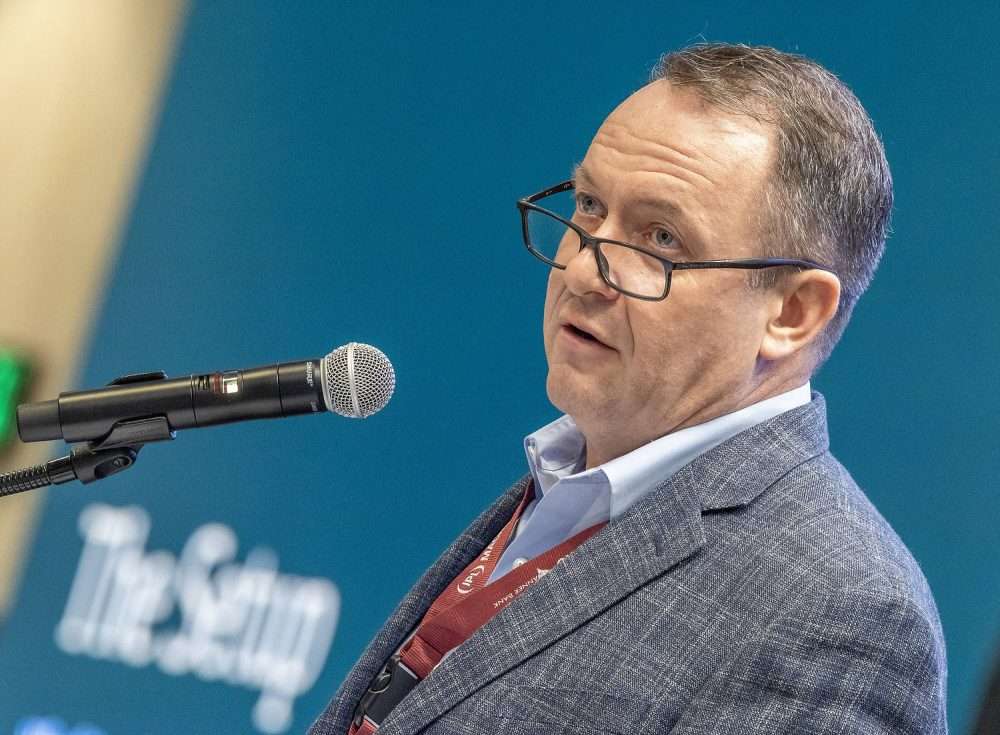
To cherry growers at the 83rd Annual Cherry Institute, Adam Brohimer of Luminary Insights said retailers could get away with charging higher prices that would translate to higher returns. Brohimer delivered the keynote address on Jan. 7 at the Yakima Convention Center in Yakima, Washington.
“Cherries are not a commodity, they are little gold mines,” said Brohimer, a produce industry analyst. “You have something special.”
With a self-described “dense” lunch presentation, Brohimer made the argument that retail prices and FOB do indeed connect, if not perfectly, and that U.S. demand for cherries exceeds supply. It just may not always feel that way.
“There’s reason to be very optimistic if I’m sitting in your shoes,” he said.
Brohimer highlighted the day-long agenda for the Cherry Institute, hosted by Northwest Cherries.
Cherry growers in the Northwest suffered through a year of low returns with large volumes.
Cherry King honored
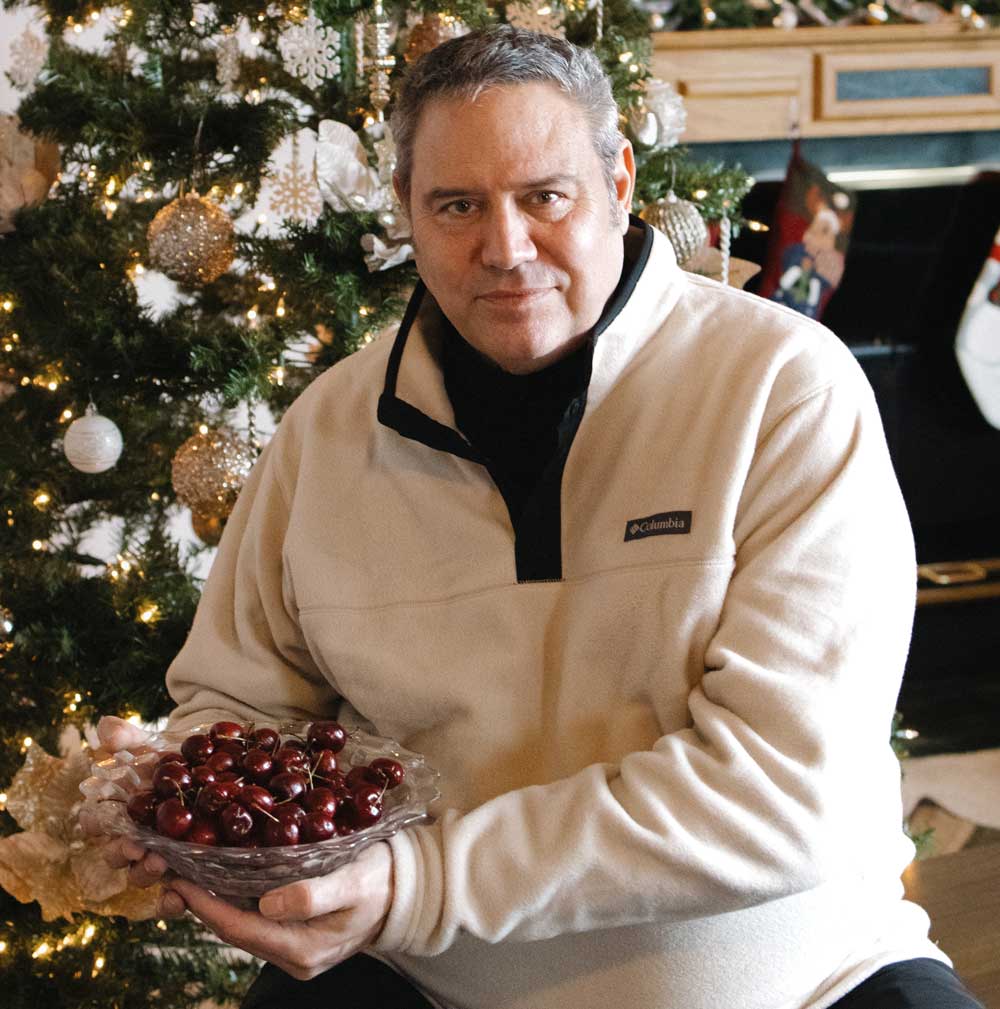
Also during the lunch slot, Washington State Fruit Commission board chair Doug Field announced the annual Cherry King winner: B.J. Thurlby, the longtime president of the fruit commission, which manages Northwest Cherries and the Northwest Cherry Growers Association.
During the presentation, Thurlby was in Seattle undergoing surgery related to his Stage 4 germ cell cancer. Longtime co-worker Kathy Keeth accepted the award on behalf of Thurlby, who received a standing ovation in absentia.
“I’m shocked, I’m humbled,” he said via a video prerecorded at his home.
He urged the crowd to stay positive and resilient, and he joked that his hospital care in Seattle over the summer went up tenfold after his cherry friends sent some fruit for his medical team.
“The magic of cherries, it’s there, it’s real,” he said.
Cherry Institute also included several presentations from Washington State University researchers.
Frank Zhao, endowed chair of plant pathology, told growers he has seen a rise in bacterial canker resistance to copper and the antibiotic kasugamycin. He has experimented with clove oil, which works well in the laboratory at low concentrations but has yet to pay off in the orchard, he said. Meanwhile, Oregon growers in the Columbia River Gorge have noticed an uptick in powdery mildew.
New cherry variety R19 has been released and will be available for preorder this spring, said WSU breeder Per McCord. The cherry harvests about the same time as Chelan but grows larger and firmer with more Brix.
“It’s nice to report a success,” he said. Other promising varieties are making their way through Phase 3 trials.
Suzette Galinato, a WSU economist, told growers that only yellow cherries currently fetch a high enough FOB price — $3.15 per pound — to cover the full cost of production, including non-cash costs such as opportunity cost and depreciation, based on her most recent enterprise budgets. Late-season red cherries have higher returns than those of early and mid-season reds, but all return below the full cost of production.
WSU tree physiologist Matt Whiting told growers that decades of trials show gibberellic acid, namely GA3, does indeed delay fruit maturity and promotes firmness. The material also helps thin the following year’s flowers, but its effect on rain-splitting is inconclusive.
Other presentations included a discussion of the annual crop estimation system, presented by David Marshall, an economist at Agrimanagement; a panel discussion on the state of the cherry market; and updates on the domestic and export marketing programs.
Good Fruit Grower ended Cherry Institute by hosting a reception to honor its 80th anniversary. The magazine is owned by the Washington State Fruit Commission. •
