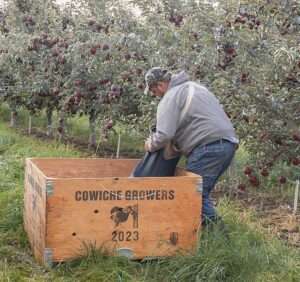






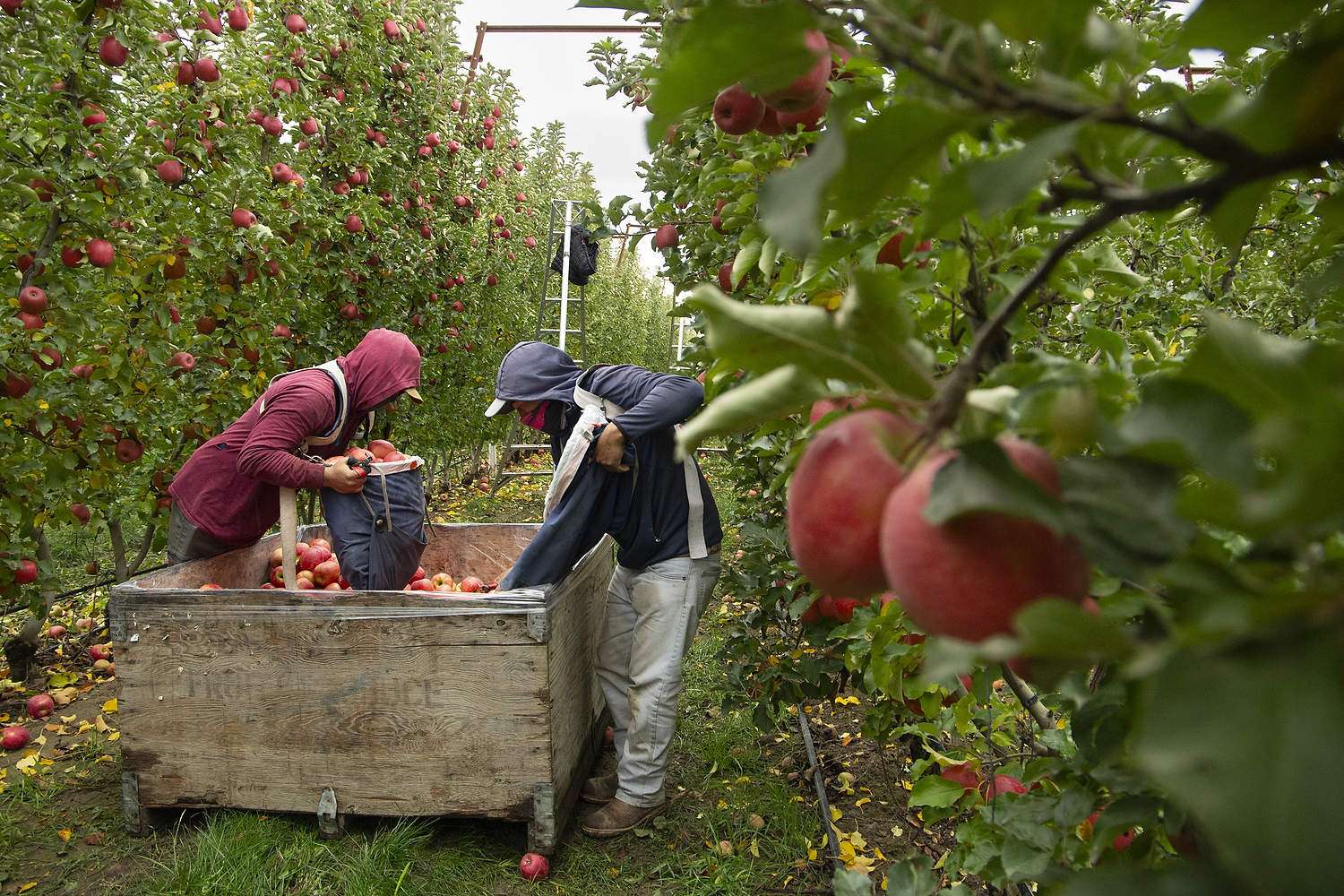
In a recent survey, most farmworkers in Washington said they make less money five years after the state passed its agricultural overtime law.
Washington State University’s Social and Economic Sciences Research Center conducted a survey, in Spanish and English, of 643 year-round and seasonal agricultural laborers, asking about the net effect of the state’s 2021 law on their paychecks.
Of the respondents who answered questions about wages, 68 percent said their paychecks have decreased, according to a findings summary released Sept. 14 from the Center for Latino Leadership, a nonprofit advocacy group that sponsored the survey.
“The data helped quantify the stories we were hearing,” said Maia Espinoza, executive director and founder of the Center for Latino Leadership.
In 2021, the Washington State Legislature passed the law that removed agriculture’s federal exemption to overtime requirements, gradually lowering the threshold at which employers would be required to pay 1.5 times a worker’s regular wage. The cap has been 40 hours since 2024.
After the law passed, the Center for Latino Leadership organized informational gatherings that morphed into statewide rallies against the law. The group even steered some of those farmworkers toward protests in Olympia.
A few farmworkers in their ranks favored the overtime wage requirement, she said, but the majority complained that they would be making less money in the long run.
Those protests have lost momentum in Olympia, said Jon DeVaney, president of the Washington State Tree Fruit Association, as farmworkers fearing federal immigration enforcement have been less willing to make public statements or attend rallies.
Other ag employer groups have sought a seasonal increase to the overtime cap but have not yet convinced lawmakers.
“It’s hard to get that change adopted,” said DeVaney, even though early drafts of the bill contained a seasonality clause. “That’s why this study is important.”
Other states, including Colorado, have implemented seasonality clauses after passing their own ag overtime laws.
Other state farm employer groups say the findings prove what they suspected all along: The overtime wage requirement pushed employers to reduce worker hours and therefore overall income.
“And the first study of farmworkers in Washington comes out telling the story many of us thought was happening,” said Enrique Gastelum, CEO of WAFLA, a nonprofit agricultural labor association in Lacey, Washington.
Save Family Farming, a Washington advocacy group, had similar comments.
“This study affirms the concerns we had even before this misguided law was passed: that it would ultimately harm not only Washington’s family farms, but the very people it was intended to help — the farmworkers who make up an important part of our farming community,” said Ben Tindall, executive director, in a news release.
Respondents included both H-2A employees and domestic workers from a variety of crops, but 96 percent said they worked in tree fruit. The survey was designed for Washington farmworkers but was open-access, not a controlled, random sample.
Columbia Legal Services, the legal aid group that filed a lawsuit on behalf of a dairy worker, which led to the overtime law, questioned the validity of the survey because it was spearheaded by a group that has publicly opposed farmworker overtime wages.
“Even if the results were sound, all it would show is that growers are giving workers fewer hours because they don’t want to pay overtime,” said Antonio Ginatta, Columbia Legal’s policy director. “They’ve profited for decades from the injustice of farmworkers being excluded overtime in the state, and they want to keep profiting without having to pay workers fairly for the extra work.” •