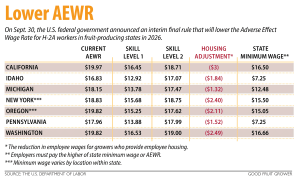






The U.S. Department of Labor has announced new Adverse Effect Wage Rates.
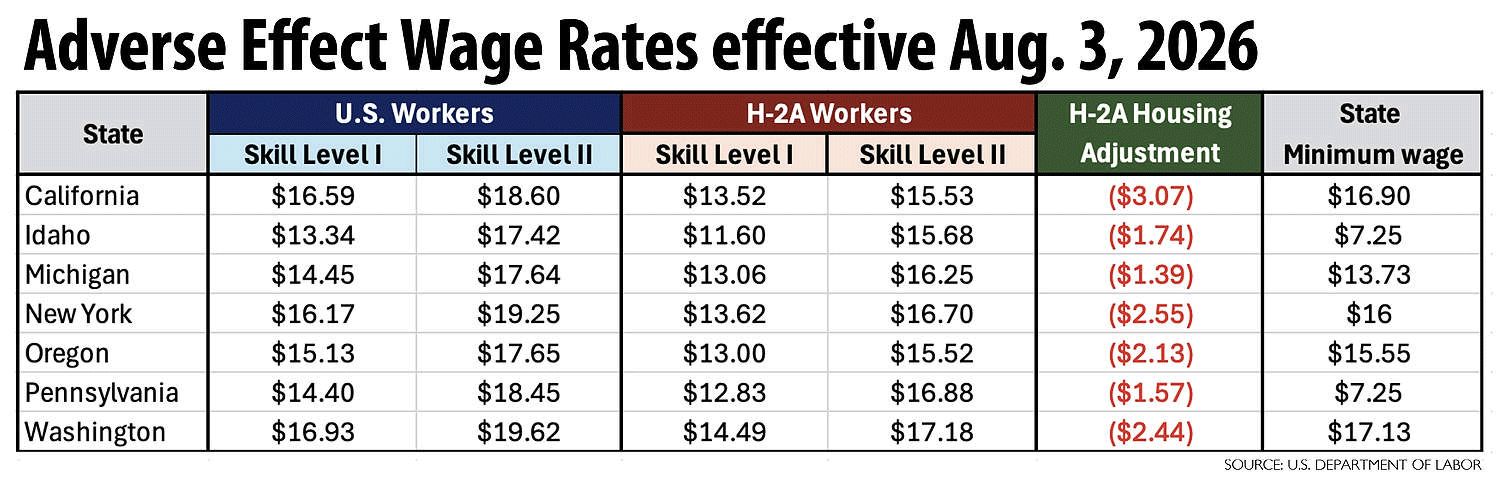
The AEWR rates, state-by-state wage floors that growers who hire H-2A workers must pay, inched up in most cases for growers in states with heavy tree fruit production. For example, Washington’s hourly Skill Level I rate went up from $16.53 to $16.93.
There were two exceptions: The Skill Level II hourly rate went down from $18.71 to $18.60 for workers in California and from $15.25 to $15.13 in Oregon. However, current H-2A rules do not allow employers to reduce wages under existing contracts.
H-2A rules still say growers must pay the higher of their state’s minimum wage or AEWR. They also must pay the highest between AEWR, state minimum, federal minimum, a negotiated contract or prevailing wages.
The new AEWR rates take effect Aug. 3 for most states. Idaho and 16 other states start on Aug. 17 due to a court order issued last year.
AEWR rates are still lower than they were before the Trump administration adjusted H-2A regulations in September 2025. One of the changes was the use of different surveys and methodology to calculate the minimums, in most cases lowering them, and creating two skill tiers. Most orchard laborers would fall under Skill Level I.
The changes had long been sought by specialty crop producer groups, many of which now are asking U.S. Congress to codify some of the changes through the Securing Agriculture’s Workforce Act, a bill sponsored by Pennsylvania Republican Rep. Glenn Thompson. •